The owner of Soma Osteopathy clinic in Leith is moving overseas permanently. He has decided to close the clinic with immediate effect. This has come as rather a shock and I am deeply sorry for the inconvenience caused to our patients.
I also work at Eyre Place Osteopaths, near the bottom of Dundas Street, and I will be opening up more availability there when possible. Click the link to book online or call the clinic – contact details at the foot of the page. I hope to see you soon and remember that, under GDPR rules, you have the ‘right of portability’ of your treatment notes. This means that if you request your notes to be forwarded to me from Soma, they are obliged to comply.
We are seeing lots of patients at the moment with ‘lockdown back pain’. What we mean is that whenever you have a change in lifestyle it can have an effect on the health of the spine. In 2020, many people suddenly stopped doing their normal work and their usual exercise routine. Instead, they often found themselves sitting for more of the time, in front of the TV or working at a laptop.
They were sitting on the couch or a dining chair, at a table, rather than on an office chair at a desk. Sometimes people were working, or studying, on the floor or on their bed, snatching hours to get things done in between child care, or working late at night if they were sharing a computer. Exercise was often restricted to walking or cycling, with gyms and swimming pools closed and team sport banned. The stress, anxiety and fatigue didn’t help.
Inevitably, after a few months, their neck and back started to complain. Sometimes the pain was new to the person, sometimes it was a flare up of old symptoms. We normally see this pattern when there’s a significant life change, such as a new job, a new baby, or some such alteration in routine. But this year it’s off the scale, in terms of numbers, because so many of us have experienced a big life change at the same time.
Here to Help
Osteopaths can help you get back to health, but have a think about the changes that have affected you and what you might do to bring more comfort and ease to your body. See this post on sitting posture, for example. If some of the tension in your body is from stress and anxiety, try one of the guided meditations on Insight Timer or Headspace. A change in lifestyle doesn’t have to mean pain!
Osteopaths are classed as essential workers so we are open and you are allowed to come and see us, after some checks on your covid status.
We are open for patients, offering excellent osteopathic care as usual. Before you come in you will be asked a few questions to assess your Covid status. If it is OK for you to come in, when you arrive we will check your temperature and ask you to sanitise your hands. Please wear a mask or face covering, unless you are exempt. We will be wearing a mask, apron, gloves and eyewear for our safety and yours. We clean the treatment room and all touch points between each patient. It’s great to be able to see you face to face and get ‘hands on’! See you soon!
There are many great advantages to being tall – seeing over other people’s heads at gigs or the cinema, being able to reach for things in the top cupboard, playing basketball…But there are also tall people problems. As osteopaths we tend to see the result of these problems in the form of neck and back pain. Typical tall people problems include:
At home the kitchen countertops and basins are designed for average height.
So is the vacuum cleaner, ironing board, floor mop…
Door frames are a standard height. Duck or you risk head injury!
Cars are often uncomfortable for tall people to sit in, let alone drive, with both headroom and legroom discomfort.
Desks and chairs are standard size and not usually fully adjustable.
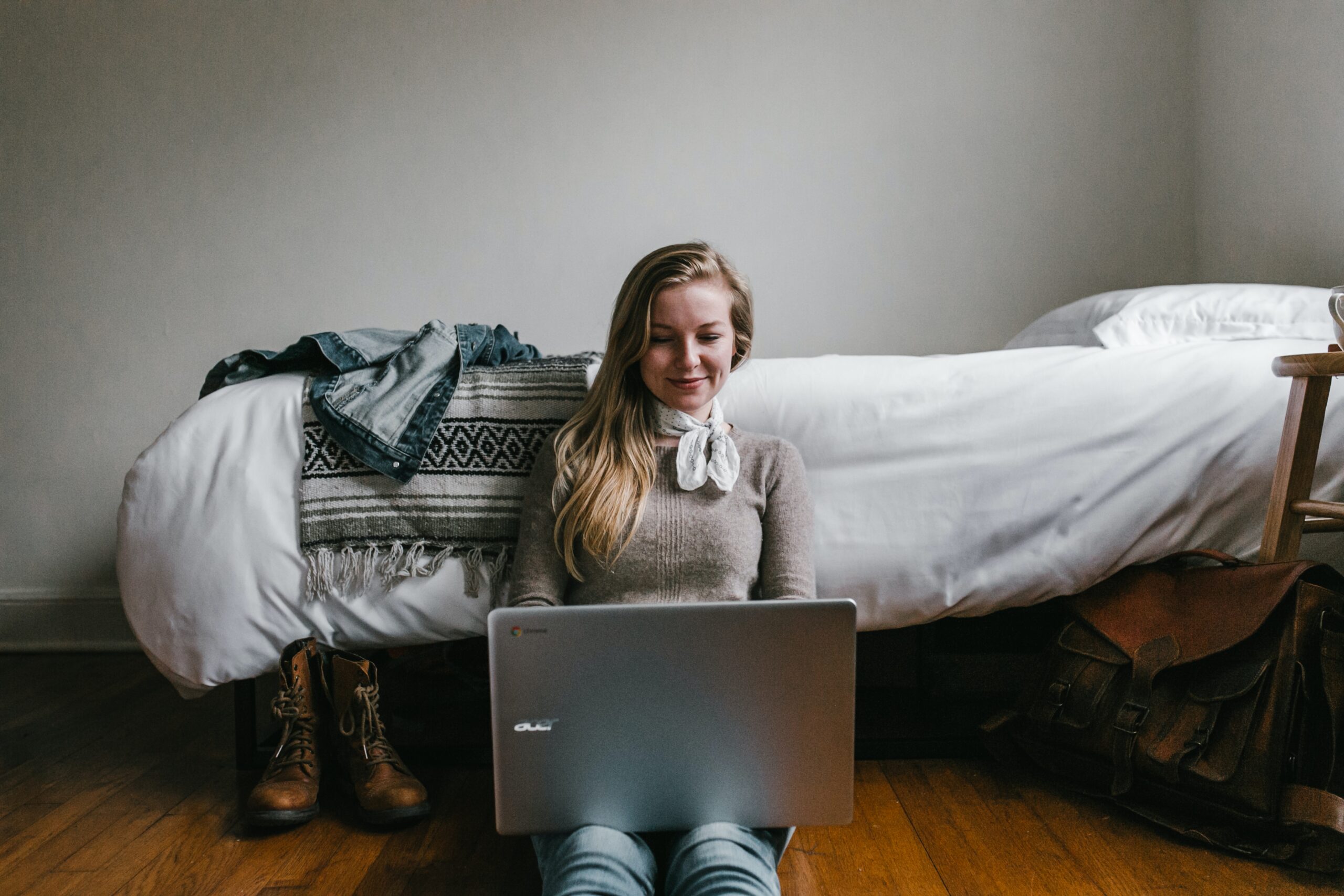
Laptops are a nightmare for everyone, but more so for tall people, because the keyboard and screen are attached to eachother, forcing you to hunch over to see the screen.
Photo: Andrew Neel from Unsplash
Talking to people tends to make the tall person stoop so you are ‘eye to eye’ with the other person/people
Tall people can be self conscious about their height and so stoop all the time to seem shorter.
In 2020, when we have all been at home more and our working routines have been disrupted, osteopaths are seeing more neck and back pain related to postural issues.
Some Solutions
Bringing these problems to conscious awareness is the first step in solving them. Can you get a separate screen for the laptop? Are you sitting at a chair that is comfortable for you? If you’re having a new kitchen, what height suits you for the countertops? If you have a new baby, is the changing table the right height for you? Next time you buy a car, make seat comfort a priority. Putting these small changes in place can make a big difference to your spine.
Don’t forget to change posture regularly, especially when you are working on the computer. Get up and move! Meanwhile, if you have any pain see your osteopath and discuss your particular circumstances. Read more about posture here.
I recently gave a webinar on what coronavirus does to the body. It is aimed at osteopaths so it contains some technical detail, but it explains how the coronavirus works, how the immune system responds, and how you can reduce your risk of infection. If you want to know what coronavirus does to the body and how it affects various body systems, this will give you some answers. I also explain how osteopathy can support your return to mental and physical health if you have had Covid19.
All of us have experienced the pandemic and have felt its far reaching effects into our lives and relationships. If your health is suffering as a result, why not book in and we can help support you back to a better mental and physical state. Osteopaths are able to see patients face to face and have time to listen to your concerns. Rest assured that we have all the PPE and infection control procedures in place to keep you (and us!) safe.
I will be returning to both clinics next week, see foot of the page for details. It will be wonderful to be seeing patients again, even if the new guidelines mean it will be a slightly different experience. Patients have to be triaged before they come in, to make sure they are well, and we will be checking temperature on arrival. We are allowing extra time for cleaning and admin procedures, for everyone’s safety. I will be wearing PPE and patients are asked to wear a mask and to clean their hands on arrival. Other than that, it will be the same relaxing and beneficial experience as usual. Hope to see you soon!
So, the baby is crying, has been for ages. What’s up? This video looks at a number of reasons why your baby might be unsettled. It goes on to give you some great ideas on what to do to try and settle your baby. I have over 20 years experience of treating babies and this is probably the most common presentation. It’s exhausting and stressful for parents and not much fun for the baby. The good news is that this often resolves by itself, with a bit of help from informed parents. Osteopaths can help you to assess why your baby is unsettled and advise on what to do.
Dogs can’t tell us they are suffering so how can you tell if a dog is in pain? The good news is that you know your dog and you can use that to help you spot changes in behaviour. Look out for:
Limping – watch your dog walk and trot away from you and towards you. It doesn’t matter if you can’t tell which leg is lame, just look for unevenness. Is one leg being brought underneath so that the paw lands under the middle of the body, rather than directly under that shoulder or hip?
Is your dog a bit snappy with you or other members of the household?
Change in behaviour with other dogs – is he reluctant to play? More reactive than usual? Needs more space?
Change in appetite, bladder or bowel habit – these can indicate pain or underlying health problems
Walkies – Is your dog wanting to walk less far or at a slower pace? Is he sleeping more?
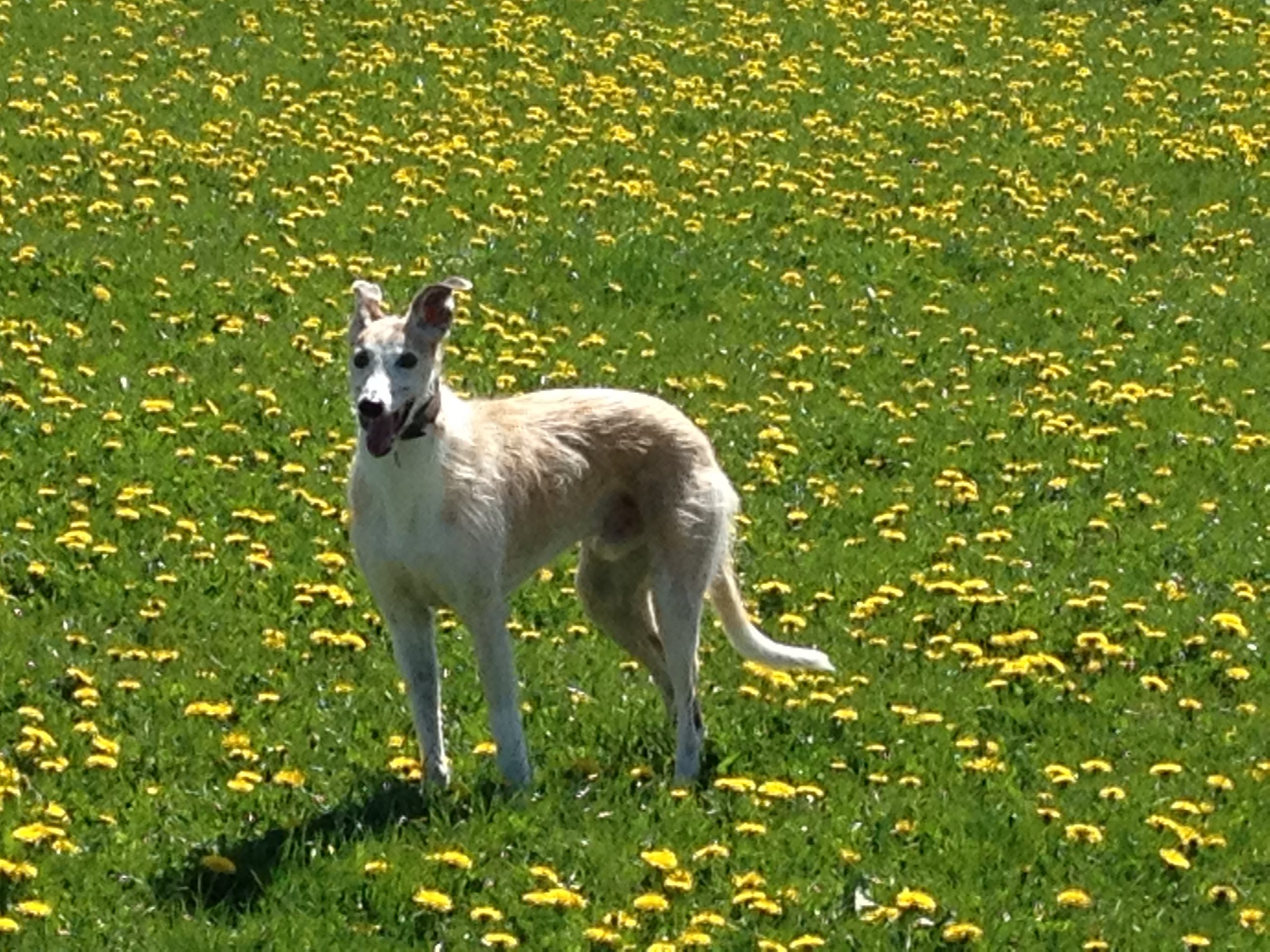
Look at your dog’s face – do his features look pinched? Are his eyes dull or bright? Is he smiling or grimacing? What about his tail – is it between his legs or wagging as usual? Look at my Gobi dog above – I know there’s a big clue as to which is the pained dog and which is the happy dog, but still, look at his face, posture and tail.
Physical signs – is your dog panting? Is his heart rate faster than normal? Is his temperature up? Is he blinking more than usual? Are his gums pink? (‘Normal’ varies by size and breed – do you know what your dog’s normal should be?)
If your dog is in pain, osteopathy may be able to help. Please speak to your vet first to make sure there is no serious underlying condition and, if they’re happy, give me a call.
In the last couple of months we have all learned how to use the various platforms for video conferencing. Grandparents, parents and children can see each-other, friends can get together, separated lovers can do what lovers do, businesses can have staff and customer meetings, educators can educate, in a way that wasn’t possible until recently. So why do we feel Zoomed out? Suffering WhatsAppathy? Tired of Skype?
The answer lies in understanding that our nature as a social species means that our sense of safety is dependent on interaction with others. We co-regulate – that is, our own nervous system responds to those around us, detecting cues and responding at a sub-conscious level. A friendly word, a smile, a welcoming gesture, a reassuring touch, or a comforting hug are all cues that indicate safety. We also respond to more subtle cues – someone leaning in to really listen to us, recognising the smell of fear, picking up on body language that says ‘I’m relaxed’, a baby responding to her parent’s heartbeat when she’s in their arms, or hearing a soothing tone of voice, for example.
The Covid crisis has made many of us fearful, anxious and stressed. Normally we would seek safety in social interaction but this refuge has been denied to us. While videoconferencing has helped enormously to keep us connected, it has its limitations:
We are used to video NOT being interactive. We watch films or TV without being part of the conversation, with the action being removed from us. There is a disconnect between our previous experience and this new form of interacting and our nervous system is struggling to adapt, to sense that reciprocity.
We usually only see the other participants’ heads on videocalls. We are missing most of the body language that would normally supply us with comforting co-regulating information. Even when the other person leans forward, the screen comes no closer to you to get that sense of greater intimacy. The image remains two-dimensional and the same distance away.
In a videocall with several people, in gallery view, we find ourselves obliged to pay attention to everyone, whereas in a meeting or social gathering, our attention would naturally switch from one person to another.
We would normally get up and move around or occupy ourselves with cooking or making a cup of tea, instead of being pinned to our seat in front of the screen. We are not used to prolonged in-your-face conversation.
Because this is new to us, we are not used to filling in the gaps. If you’ve seen ‘Have I Got News For You’ during lockdown, you’ll have noticed that at first they didn’t realise that they needed to fill in – laughing, looking at each-other, interacting with the host. Looking straight at the screen is like having social blinkers on.
So, armed with this understanding, we can try and improve things a bit. We need to express feelings verbally to compensate for the lack of body language. We can adjust the screen to include our hands and gesture more visibly. We can switch the setting to ‘speaker view’ so that we only have to concentrate on one person in a multi-person call. We can do something else while we are on the call to take the pressure off the conversation – play with the dog, carry on knitting or bring the laptop into the kitchen and cook while we talk. Most importantly, we can have some understanding and self-compassion for why this is so tiring and difficult.
Reference: Porges, S. W. (2020). The COVID-19 Pandemic is a paradoxical challenge to our nervous system: a Polyvagal Perspective. Clinical Neuropsychiatry, 17(2),135-138.
While we are all at home it seems a good time to remind everyone about the best posture for sitting at a desk. Working at a laptop or tablet is particularly posture-hazardous! A few simple changes can make the difference between being able to sit comfortably and being in pain. Hidden Edinburgh has a post with my top tips for good posture. Check out the Hidden Edinburgh website for people, places, events and all things that are great about Edinburgh.
At the moment we are offering video consultations and phone chats if you need any help. We can assess what is wrong through discussion and seeing where you are experiencing symptoms, give you advice and exercises and general reassurance. Still here to help! Book online via the clinic websites below.