
Dogs can’t tell us they are suffering so how can you tell if a dog is in pain? The good news is that you know your dog and you can use that to help you spot changes in behaviour. Look out for:
- Limping – watch your dog walk and trot away from you and towards you. It doesn’t matter if you can’t tell which leg is lame, just look for unevenness. Is one leg being brought underneath so that the paw lands under the middle of the body, rather than directly under that shoulder or hip?
- Is your dog a bit snappy with you or other members of the household?
- Change in behaviour with other dogs – is he reluctant to play? More reactive than usual? Needs more space?
- Change in appetite, bladder or bowel habit – these can indicate pain or underlying health problems
- Walkies – Is your dog wanting to walk less far or at a slower pace? Is he sleeping more?

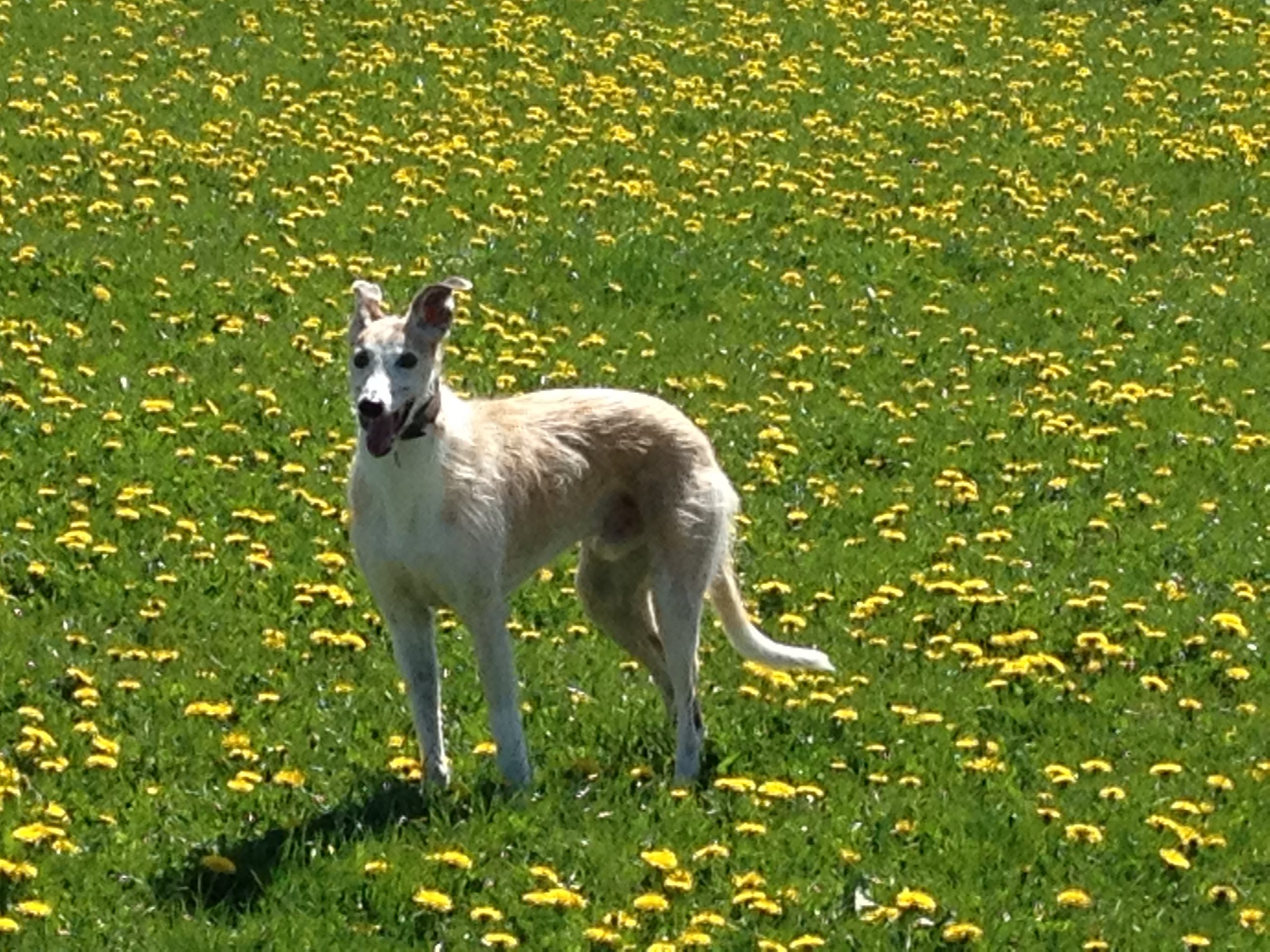
- Look at your dog’s face – do his features look pinched? Are his eyes dull or bright? Is he smiling or grimacing? What about his tail – is it between his legs or wagging as usual? Look at my Gobi dog above – I know there’s a big clue as to which is the pained dog and which is the happy dog, but still, look at his face, posture and tail.
- Physical signs – is your dog panting? Is his heart rate faster than normal? Is his temperature up? Is he blinking more than usual? Are his gums pink? (‘Normal’ varies by size and breed – do you know what your dog’s normal should be?)
If your dog is in pain, osteopathy may be able to help. Please speak to your vet first to make sure there is no serious underlying condition and, if they’re happy, give me a call.