Cranial Osteopath in Edinburgh

Author: Mary Monro Page 1 of 2

Osteopath to humans and animals, mostly horses and dogs. I love caring for everyone from newborns to our most senior citizens. I enjoy hearing your life story and making sense of how you've arrived at where you are now. My mission is to get you back to doing the things that bring you joy.

from Pixabay, pic by Tatyana Kazakova

Treat Them Like Athletes: The Case for Taking Performers’ Physical Health Seriously

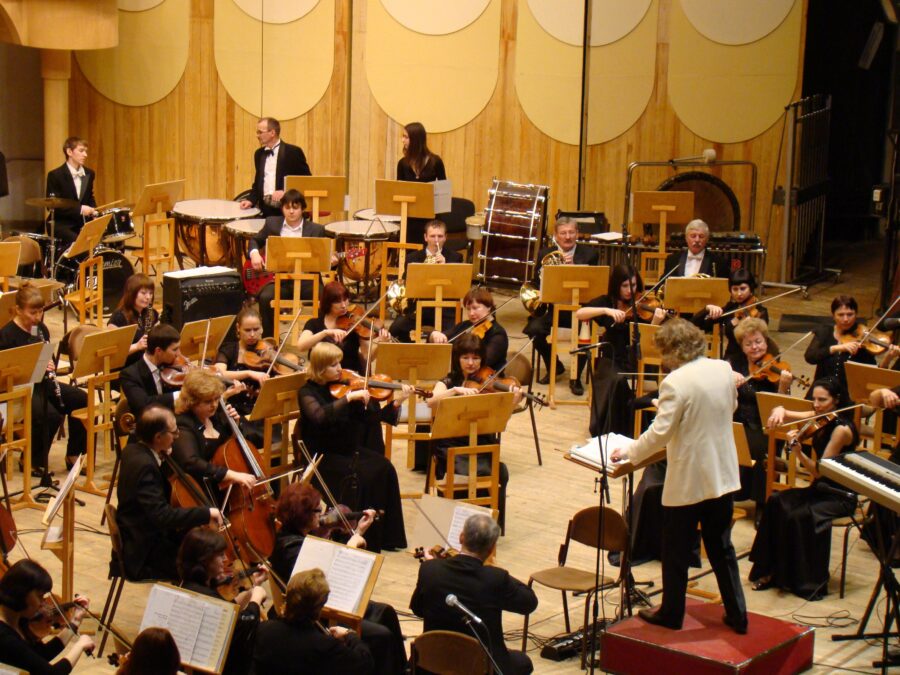
I enjoy treating performers and I am on the register of the British Association for Performing Arts Medicine. While musicians and singers face some unique challenges, in many ways they are similar to athletes.

Growth and Development

Performers often start their training in childhood and go through puberty, with its major growth period, while doing many hours practice every day. If you think about this from a musculoskeletal perspective, those bodies are being held in particular postures and using particular muscles that moulds their development, the same as athletes. It’s different depending on which instrument (or sport) it is – violin, flute, cello, piano, guitar, trumpet… or voice, the invisible instrument. I am most concerned by the impact of asymmetrical instruments on development of the spine and upper limbs. Also, the voice was not evolved to sing opera and it’s remarkable that this is possible at all! For dancers, it’s different again, depending on discipline. But, for all of these young people, there is a huge physical demand on the growing body.

from Pixabay, pic by Engin Akyurt

I would love to see more attention paid to young performers to help them develop their strength and resilience to injury. This would serve them throughout their careers – and keep the show on the road! We’re seeing ballet schools building a foundation of strength training in the same way that rugby teams and athletes do, but this isn’t happening yet for musicians and singers. In my practice, I encourage student and professional performers to add strength training to their routine and show them bespoke exercises that can help in their specific circumstance. Home-based and travel-friendly options are key for people whose routine is often far from regular!

Professionals’ Physical Health

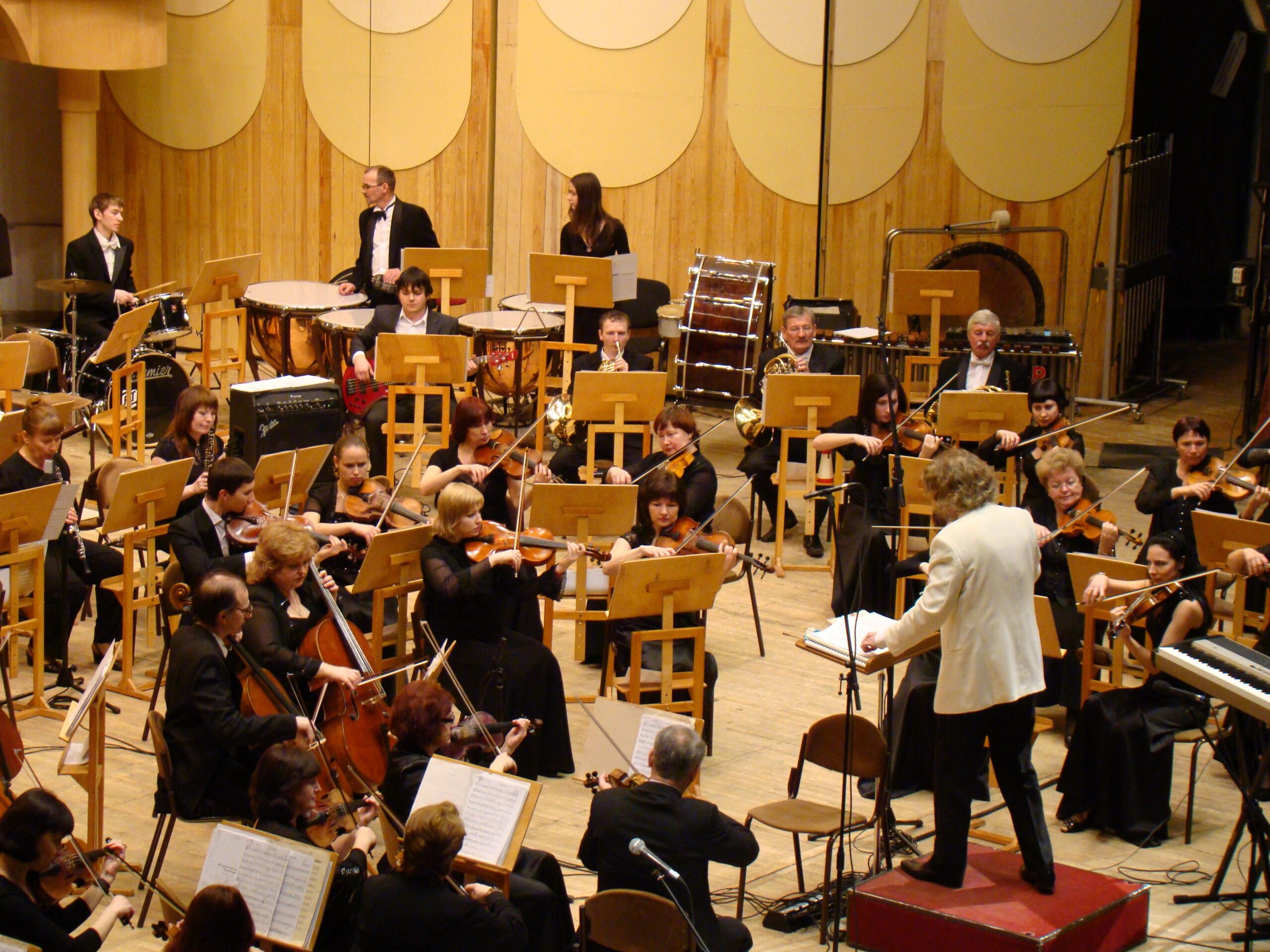
Professional performers face ongoing physical demand for practice, rehearsal and performance, often lasting several hours a day and over many years. This can lead to a form of repetitive strain injury (RSI), from using the same muscles and postures over and over again. In addition to voice coaches, singing, instrument-specific and dance teachers, performers need a personal trainer or strength coach to help them to maintain their physical health and reduce risk of RSI and other injuries, such as focal dystonia.
from Pixabay, pic by Tatyana Kazakova

And musicians may be playing seated on poorly designed chairs, or in cramped conditions. Performers may be wearing uncomfortable costumes, footwear and headgear that affect their posture and ability to sing or dance well. Musicians, singers and dancers may be performing on a raked stage, or even flying above it, adding to the demands on their body and risk of injury.

Mental Health

It’s not just physical health. Performers and athletes are often under extreme pressure to produce their best performance and there may also be intense competition for work. This can provoke anxieties of many kinds, from performance anxiety or self-doubt to hypervigilance over vocal/playing health or stress caused by using an instrument that doesn’t quite fit. Conductors, directors and even costume or set designers can add to the pressure and challenging conditions for performers. Again, athletes suffer similar pressures – to achieve selection for championships or the olympics, to score the winning goal in the final minute of the match, to perform a personal best at the competition rather than at the gym. Being relaxed, confident and mentally resilient in adversity is key to both success and good mental health.

We also need to consider additional stresses that may be affecting the performer, such as old injuries, chronic conditions, social dynamics, neurodiversity or disability. As an osteopath I need to take all of these stresses into account in my assessment, as the issues aren’t always in the tissues. Is that jaw tension from singing/playing? Or is it the recent bereavement, relationship split, pain from an old fracture or insensitivity from colleagues regarding neurodivergence?
From Pixabay, pic by J Dalton

Performers’ sense of identity is often strongly linked to their profession, adding to the pressure to perform: “who am I if I’m not a dancer/singer/musician?” This can be exacerbated if singers perform their own, sometimes autobiographical, songs, or become known for their particular style or tone of voice. Musicians may play their own compositions or be a virtuoso on their instrument. Yet this reliance on the performed identity is precarious, dependent on a mentally and physically healthy person to maintain it through the inevitable ups and downs of life in the arts. In extreme cases a reinvention is necessary, such as Michael J Fox‘s decision to make his diagnosis public and work as an advocate for Parkinson’s disease. He has eventually returned as an actor, after many years living with the disease. (I highly recommend Shrinking, by the way, also starring Harrison Ford. It’s hilarious and brilliant).

In my work as an osteopath I use a holistic approach to help performers understand the causes of their symptoms and work collaboratively to achieve a lasting improvement to health, and a long and happy career!

Book Online


wooden statue of woman and child

Pelvic Girdle Pain (PGP)

The ligaments of the pelvis naturally soften and relax in pregnancy but this sometimes results in instability and pelvic girdle pain (PGP). The Pelvic Girdle Partnership is a national charity that offers free information and support for sufferers. I have been added to their list of recommended practitioners, after they received patient testimonials about my work.

I’m thrilled about this as I enjoy treating pregnancy-related pain and patients often don’t realise that this pain can be treated. PGP can make  walking, stairs and getting in and out of the car difficult, the ordinary activities of every day life. When there are other little ones in the home it can be extremely challenging to cope with the pain and their demands. The first patient I ever treated for PGP was when I was an undergraduate working in the college clinic, over 25 years ago, and I have never forgotten the transformation that we saw in a short time.

Osteopathy 150 years and proud

#Proud Osteopath: Patient Satisfaction

The National Council for Osteopathic Research (NCOR) runs an app on behalf of the UK profession that measures our performance. The app is an osteopathic version of a Patient Reported Outcome Measure (PROM) which is a type of patient survey widely used across the healthcare professions.

So far, almost 5000 adult osteopathic patients have completed the survey. They range in age from 18-90, 66% are employed while 25% are retired, and 62% of them are women. As you might expect, 56% present with low back pain, but often there is more than one reason for seeing an osteopath. Pain and lack of mobility are key drivers, along with ongoing management of chronic conditions, such as arthritic pain.

Over 70% of patients said they were seen by an osteopath within three days. 93% said that their experience of osteopathic care was very good and if we add in the ‘fairly good’ responses, it rises to 99%. 90% of patients also said they were very satisfied (98% if the ‘fairly satisfied’ group are included). 71% of patients said they were much improved or completely recovered six weeks after treatment. Quite impressive outcome scores!

The PROM also asks patients to say whether they would be to recommend osteopathy to friends and family and 93% said they were likely or very likely to recommend us.

There is always room for improvement but it is heartening to see such an overwhelmingly positive response to our work. So proud to be an osteopath!

As well as the PROM, which we can give you an access code for if you would like to contribute your thoughts, it really helps if you give us feedback via Google reviews.

Soma Osteopathy closure

The owner of Soma Osteopathy clinic in Leith is moving overseas permanently. He has decided to close the clinic with immediate effect. This has come as rather a shock and I am deeply sorry for the inconvenience caused to our patients.

I also work at Eyre Place Osteopaths, near the bottom of Dundas Street, and I will be opening up more availability there when possible. Click the link to book online or call the clinic – contact details at the foot of the page. I hope to see you soon and remember that, under GDPR rules, you have the ‘right of portability’ of your treatment notes. This means that if you request your notes to be forwarded to me from Soma, they are obliged to comply.

complex plant close up

New Page on Coping with Menopause Symptoms

Check out my new page on coping with menopause symptoms! (Click the link or find it under the ‘More About…’ heading). Learn all about the hormone hierarchy and how you can make simple changes to your daily life that will help you navigate a healthier path through the Change and beyond.

cartoon about the menopause

Osteopaths are well placed to talk you through the many and varied menopause symptoms that don’t always seem like symptoms. Are you just busy, stressed and tired? Or is something changing in your physiology? Together we can work it out and discuss ways of supporting your health, now and for the longer term.

Case Report on a Long Covid Patient

After an exhausting but inspiring peer review process, my case report on a Long Covid patient was published in the International Journal of Osteopathic Medicine last week. For a limited time, until 5 August 2022, you can read it for free by using this link, after which it will vanish behind a paywall.

It’s not really intended for the non-technical reader but I hope it will contribute to the wider scientific understanding of Long Covid, in all its complexity and individuality. Nobody fully understands what causes Long Covid, who is at risk, how it works or how best to treat it. I wanted to add my thoughts on it in case it is useful to other researchers or patients.

COVID-19 Long Term Effects

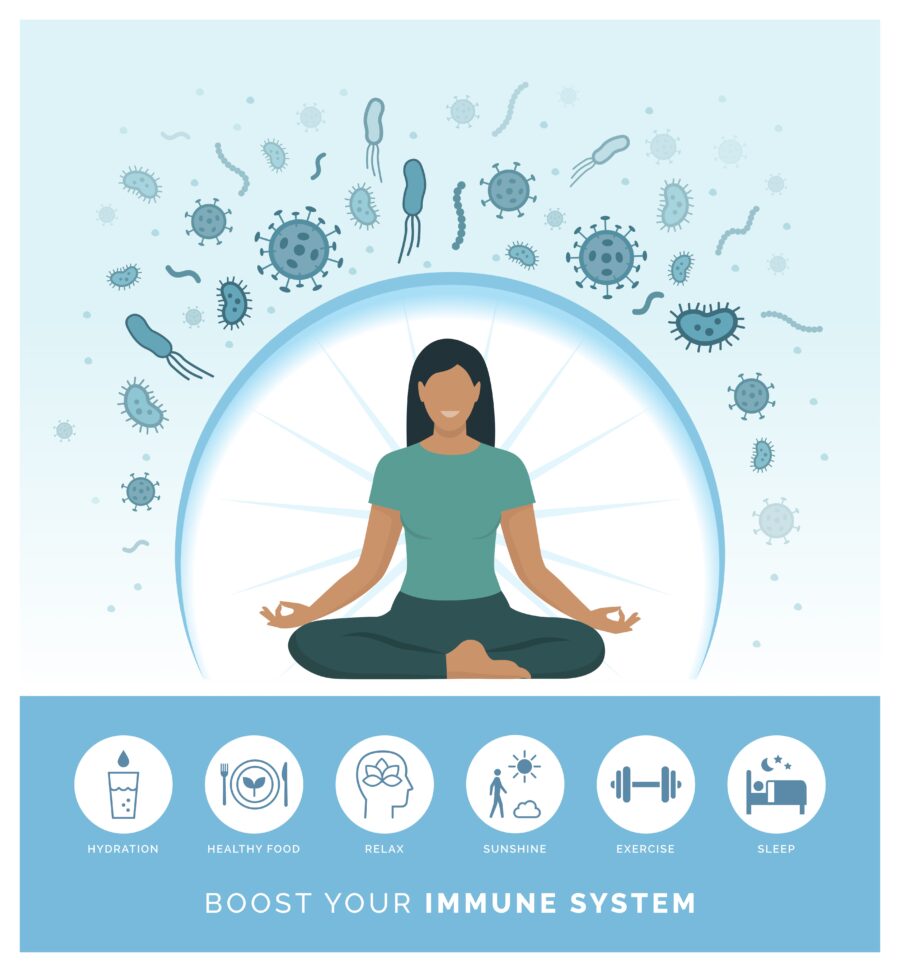
Two recently published papers on COVID-19 long term effects caught my attention. Nature reported on research that found viral fragments in the gut long after the initial infection, even if it was ‘mild’. Anecdotally, patients have told me that their persisting COVID-19 symptoms (not only gut symptoms – everything from fatigue to brain-fog to chest pain) have eased when they take a daily probiotic and fermented foods, such as kefir, kimchi and kombucha, in addition to a healthy diet. There is some evidence for these supporting immune health and shifting the balance in the gut microbiome to healthy bacteria.

The Lancet published European-wide research on the risk of thromboembolism (blood clots) among those with COVID-19. Unusually the study looked at non-hospitalised patients as well as hospitalised, with over 900,000 patients studied in all. They found that the risk is higher for older people and those with comorbidites such as heart disease, high blood pressure and diabetes. It is also much higher in those with severe COVID-19 requiring hospitalisation. However, there is a risk of thromboembolism for mild COVID-19 sufferers, indicating that this is a feature of the disease.

Underlying this is the health of the vascular endothelium (VE), the lining of the blood vessels. It is the VE that creates the environment for clots to form – or not – depending on whether it is functioning normally. To support VE health, cut out sugar and – as always – eat a healthy diet with plenty of fruit and veg. A probiotic can also support VE health as a healthy gut contributes to the mechanism by which VE prevents clotting.

I do wish there was more on healthy diet and the immune system in the mainstream media!

breathing

New page on Long Covid

I’ve been meaning to write a page about what causes Long Covid symptoms for a while. Over the last couple of years I’ve done a lot of research and given lectures on the pathophysiology of Covid-19. I’ve also treated a number of Long Covid patients and written a case report on one of them for our professional journal (to be published soon, hopefully).

Long Covid is a mysterious condition and no-one fully understands what causes it, how it works and how to help sufferers to improve their health. There is a bewildering amount of information on the internet so I thought it would be good to write a summary to help people understand Long Covid. You can find it here or via the ‘More about..’ menu on the home page. I hope you find the explanations, tips and self-help measures useful!

Lockdown Back Pain

We are seeing lots of patients at the moment with ‘lockdown back pain’. What we mean is that whenever you have a change in lifestyle it can have an effect on the health of the spine. In 2020, many people suddenly stopped doing their normal work and their usual exercise routine. Instead, they often found themselves sitting for more of the time, in front of the TV or working at a laptop.

They were sitting on the couch or a dining chair, at a table, rather than on an office chair at a desk. Sometimes people were working, or studying, on the floor or on their bed, snatching hours to get things done in between child care, or working late at night if they were sharing a computer. Exercise was often restricted to walking or cycling, with gyms and swimming pools closed and team sport banned. The stress, anxiety and fatigue didn’t help.

Inevitably, after a few months, their neck and back started to complain. Sometimes the pain was new to the person, sometimes it was a flare up of old symptoms. We normally see this pattern when there’s a significant life change, such as a new job, a new baby, or some such alteration in routine. But this year it’s off the scale, in terms of numbers, because so many of us have experienced a big life change at the same time.

Here to Help

Osteopaths can help you get back to health, but have a think about the changes that have affected you and what you might do to bring more comfort and ease to your body. See this post on sitting posture, for example. If some of the tension in your body is from stress and anxiety, try one of the guided meditations on Insight Timer or Headspace. A change in lifestyle doesn’t have to mean pain!

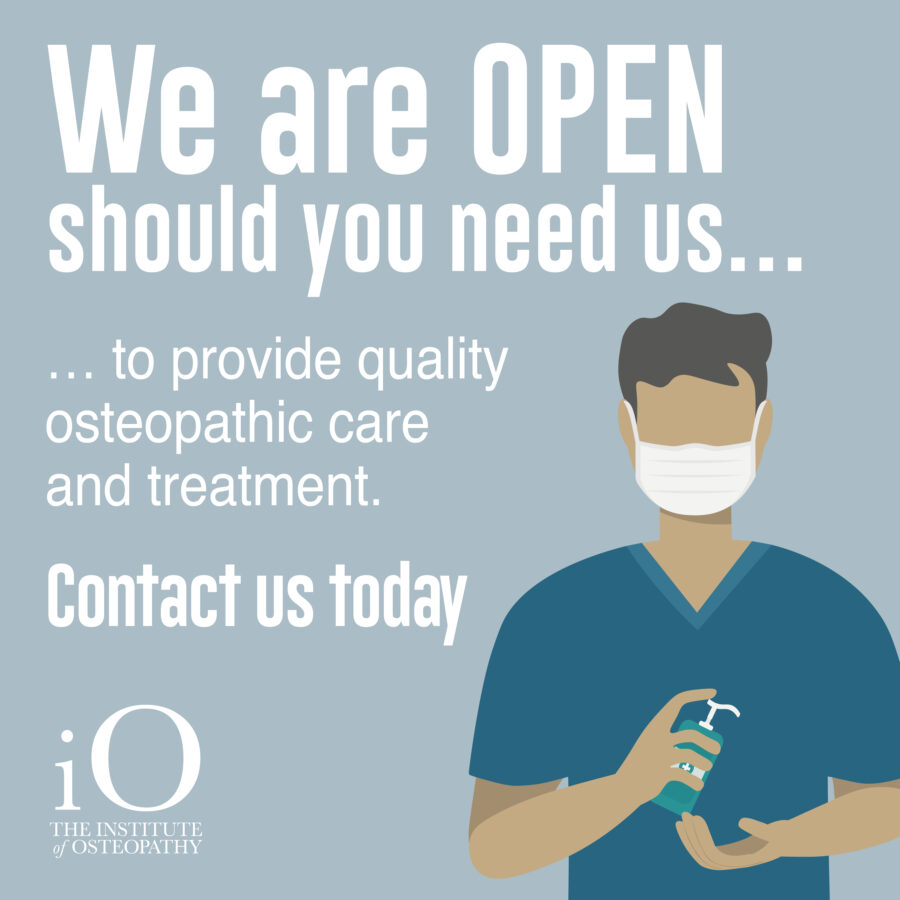
Osteopaths are classed as essential workers so we are open and you are allowed to come and see us, after some checks on your covid status.

we are open to provide osteopathic care

We Are Open!

we are open to provide osteopathic care

We are open for patients, offering excellent osteopathic care as usual. Before you come in you will be asked a few questions to assess your Covid status. If it is OK for you to come in, when you arrive we will check your temperature and ask you to sanitise your hands. Please wear a mask or face covering, unless you are exempt. We will be wearing a mask, apron, gloves and eyewear for our safety and yours. We clean the treatment room and all touch points between each patient. It’s great to be able to see you face to face and get ‘hands on’! See you soon!

Page 1 of 2

Powered by WordPress & Theme by Anders Norén